When Tax Season Feels Like a Guessing Game

Picture this: You’re running a successful business, juggling clients, deadlines, and growth plans. Then, out of nowhere, an email lands in your inbox:
“Please send all your documents so we can calculate your tax.”
Your heart sinks. You start digging—bank statements, invoices, slips—trying to piece together a year’s worth of transactions. Hours later, you hit send. And then you wait.
Finally, a number arrives: what you owe SARS.
For many business owners, this is the rhythm of tax season. It’s familiar. It “works”. But does it really?
The Conversation That Reinforced Everything
I recently spoke to a business owner who lives this cycle every year. When I explained how I work with my clients—keeping things simple and consistent throughout the year—she said:
“If someone asked me monthly for my stuff, I’d send it.”
That wasn’t just a comment. It confirmed what I’ve always believed: clarity isn’t complicated—it just needs structure.

The Quiet Stress Behind the System
What struck me after our conversation wasn’t the paperwork. It was the weight of uncertainty. The months of silence where the question lingers:
What will the number be? Will I have the funds to pay it?
That’s the part no one talks about. The anxiety of not knowing.
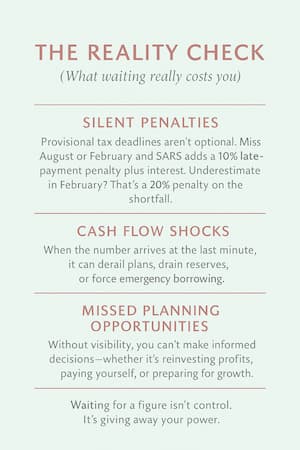
The Reality Check
(What waiting really costs you)
Silent Penalties
Provisional tax deadlines aren’t optional. Miss August or February and SARS adds a 10% late-payment penalty plus interest. Underestimate in February? That’s a 20% penalty on the shortfall.Cash Flow Shocks
When the number arrives at the last minute, it can derail plans, drain reserves, or force emergency borrowing.Missed Planning Opportunities
Without visibility, you can’t make informed decisions—whether it’s reinvesting profits, paying yourself, or preparing for growth.
Waiting for a figure isn’t control. It’s giving away your power.
Why This Isn’t About Compliance
Provisional tax deadlines—August, February, and the optional September top-up—are easy to list. But the real story isn’t dates or penalties. It’s the gap between them.
Because compliance is about ticking boxes. Clarity is about confidence. And confidence comes from knowing where you stand—not once a year, but all year.

Imagine the Alternative
Imagine a rhythm that keeps you close to your numbers. No frantic hunts. No surprise figures. No silent penalties. Just calm, predictable planning that fits your life—not the other way around.
That’s what proactive clarity looks like. And it changes everything.
Closing Thought
If you’ve ever felt that knot in your stomach when the email arrives, you’re not alone. The truth is, the stress isn’t about paying tax—it’s about not knowing. And when you replace silence with clarity, everything changes.
Because peace of mind isn’t a luxury. It’s a strategy.